

What is Modularized Curriculum?
Choosing a TVET course can feel like a big decision. Whether you're a student planning your future, a parent helping a learner choose a path, or a trainer organizing learning programs, understanding how TVET qualifications work is important.
This guide explains the TVET CDACC Modular Curricula (Cycle 03) in a clear and simple way — showing how learners can grow from basic skills training to higher professional qualifications.
What Does “Modular Curriculum” Mean?
Think of a modular curriculum as learning in steps rather than one long journey.
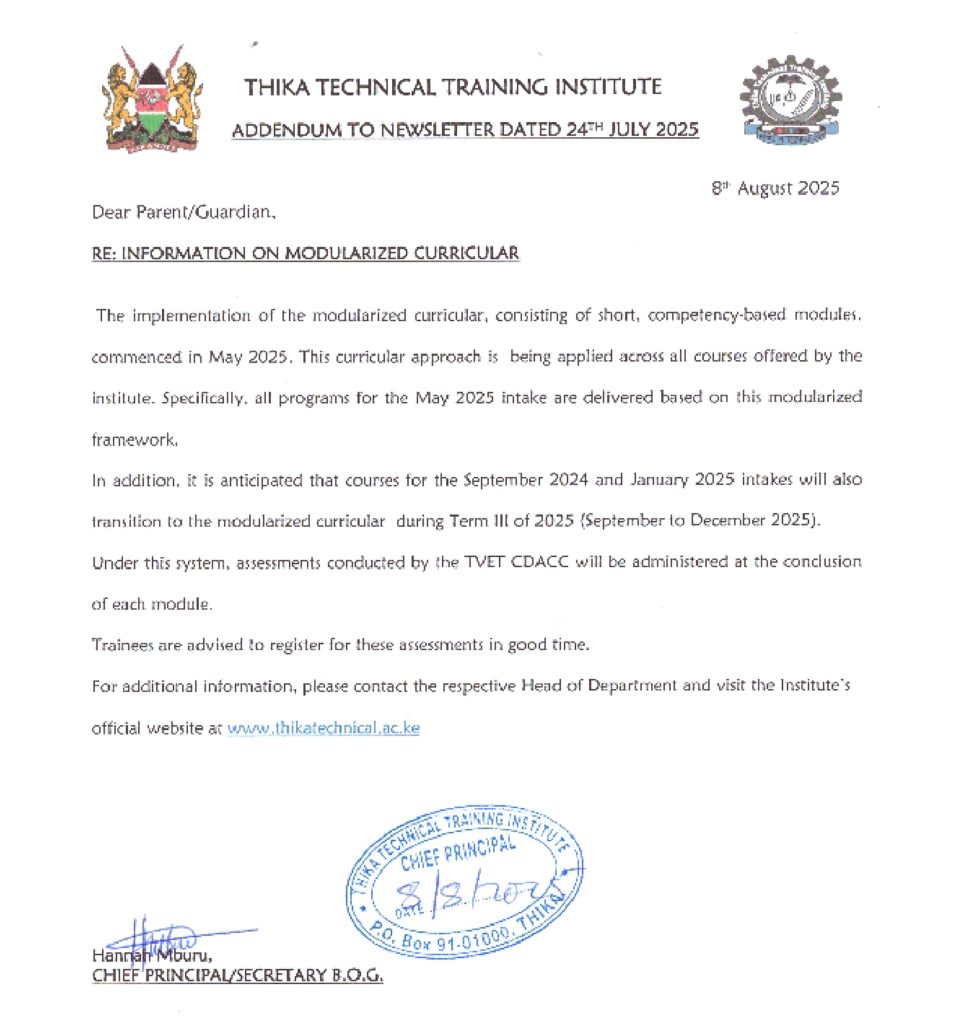
Instead of studying for several years before earning a qualification, your course is divided into smaller sections called modules. Each module focuses on a specific set of skills and knowledge.
The benefit? Every completed level leads to a recognized qualification.
After finishing a level, you can:
- Start working immediately using the skills you've gained, or
- Continue to the next level to build stronger expertise and advance your career.
How Course Progression Works
TVET courses follow a clear progression pathway. You begin at an entry level and gradually move toward more advanced qualifications as your skills and experience grow.
Courses within the same progression pathway use the same standardized examinations and assessment tools, ensuring fairness, consistency, and quality across training institutions. These assessments are coordinated and managed by the Council.
In short, TVET progression is designed to give learners flexibility, practical skills, and multiple opportunities to grow professionally at every stage of their learning journey.
| Level | What It Means | Typical Job Role | Example |
| Level 3 | Basic Skills / Artisan | Assistant, Entry-level Mechanic, or Attendant | Automotive Mechanic / Barista |
| Level 4 | Craft Certificate | Skilled Operator or Technician | Spray Painting / Bartending |
| Level 5 | Diploma | Supervisor or Advanced Technologist | Food & Beverage Operations / Community Health |
| Level 6 | Higher/Advanced Diploma | Manager, Administrator, or Senior Engineer | Accountancy / Mechanical Plant Technology |
Popular Career Pathways & Progression Examples
Wondering how your learning journey could look in real life? Here are a few popular TVET career pathways based on the official progression framework.
1. Hospitality & Culinary Career Pathway
If you enjoy food preparation, beverages, customer service, or hospitality, this pathway offers plenty of room to grow.
- Level 3: Begin your journey as a Barista, learning professional coffee preparation and customer service skills.
- Level 4: Build on your experience by moving into Bartending or Mixology.
- Levels 5 & 6: Progress into more advanced roles such as Food & Beverage Operations and eventually Food & Beverage Management, where you develop leadership and operational skills.
2. Automotive Career Pathway
Passionate about vehicles, engines, and hands-on technical work? The automotive pathway could be the right fit.
- Levels 3 & 4: Develop core skills in Automotive Mechanics, including vehicle diagnosis, maintenance, and repair.
- Levels 5 & 6: Advance into Automotive Technology or Auto Body Technology, handling more complex systems, technical expertise, and supervisory responsibilities.
3. Building & Construction Career Pathway
For future builders, designers, and construction professionals, this pathway provides a strong technical foundation.
- Level 3: Start with practical skills in Masonry.
- Level 4: Progress into specialized trades such as Plumbing or Carpentry and Joinery.
- Levels 5 & 6: Move into higher qualifications like Building Technology or Civil Engineering, preparing for larger projects and advanced technical roles.
Important Guidelines for Candidates & Assessment Centers
Key Requirements for a Smooth Assessment Process
To avoid challenges during training and examinations, keep these important guidelines in mind:
✅ Standardized Assessments
All courses within the same progression pathway use official, standardized assessment tools issued by the TVET CDACC Council.
✅ Follow Official Procedures
Assessment Centers must evaluate all registered candidates using these approved council assessment tools. This ensures fairness, consistency, and valid certification.
✅ Register Correctly to Avoid Delays
Instructors, trainers, and Heads of Department should understand the progression structure before registering learners. Proper guidance helps prevent registration errors, exam confusion, and unnecessary delays.
Frequently Asked Questions (FAQs)
Q: Can I stop studying after Level 3 or Level 4?
Yes. One of the biggest advantages of modular training is flexibility. Each completed level provides practical, employable skills. You can choose to join the workforce and return later to continue your studies at Levels 5 or 6.
Q: Do all courses progress up to Level 6?
No. Some programs have different maximum qualification levels depending on the specialization.
For example:
- Agripreneurship ends at Level 3
- Apiary Attendance reaches Level 4
- Community Health progresses up to Level 5
Always confirm your course pathway with your department before planning your progression.
Q: Who should I contact if I’m unsure about my assessment or exam pathway?
Speak to your institution’s Head of Department (HOD) or Assessment Center Officer. They have the full progression details and can guide you on correct course registration and assessment requirements.